
The Importance of Context in Learning: The Rats, the Soldiers, and the Sugar
I watched three videos this week that had nothing to do with each other on the surface, and turned out to be saying almost exactly the same thing.

The first was Johann Hari's TED talk on addiction. He describes an experiment in which rats were given two water bottles, one plain, one laced with heroin, inside an otherwise empty cage. Left with nothing else to do, most rats drank themselves into addiction. Researchers then built a second cage, a much richer one, with other rats to socialise with, wheels, tunnels, things to explore. The same two bottles were offered there too. In that cage, the rats mostly ignored the drugged water.
Hari also points to something that happened with American soldiers returning from Vietnam. Around one in five troops had been using heroin heavily during the war, and the expectation at the time was a wave of addiction arriving home with them. The reality looked very different. The vast majority stopped using once they were back among their families, routines, and support networks, without formal treatment.
The conclusion Hari draws is that addiction has less to do with the chemical itself and much more to do with the environment a person is in when they encounter it. A poor environment, isolated, understimulating, disconnected, makes a person far more vulnerable. A rich, connected one makes them far less so.
Portugal offers a real-world version of the same experiment, run at the scale of an entire country. Facing a heroin crisis so severe that Lisbon had become known as the heroin capital of Europe, Portugal decriminalised the personal possession and use of all drugs in 2001. Rather than prosecuting people, the money that would otherwise have gone into arrests and imprisonment was redirected into treatment, outreach, housing, and helping people find work and reconnect with society.
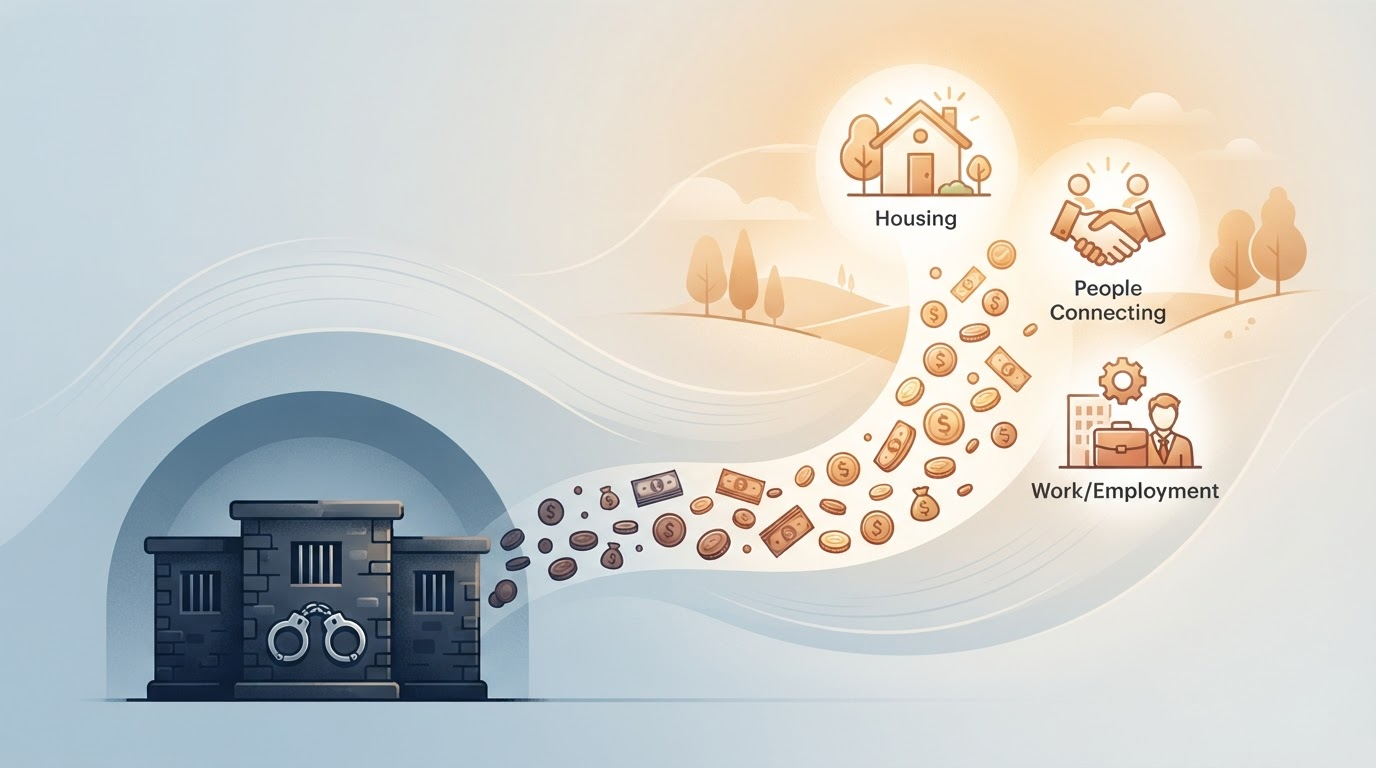
The results in the years that followed were striking. Overdose deaths from street drugs fell from around 400 to 290 a year, and new HIV infections linked to injecting drug use dropped from nearly 1,400 to about 400 within five years. Engagement with treatment rose sharply. The proportion of Portugal's prison population held for drug offences fell from over 40% in 2001 to under 16% by 2019, according to a detailed policy review.
The underlying idea mirrors the rat cage experiment closely. Punishing someone with an addiction tends to strip away exactly the things that make a rich environment rich, work, housing, family contact, a place in society. Portugal did the opposite. It used the money once spent on punishment to rebuild the kind of connected environment the rat park experiment suggests protects people in the first place.
It is worth being honest about the more recent picture too. Funding for Portugal's treatment programmes was cut sharply after 2012, falling from around $82.7 million to $17.4 million, and the number of people in treatment fell along with it. Some of the earlier gains have partially reversed as a result. If anything, that supports the underlying point even more clearly. When the positive context was properly funded, the outcomes improved dramatically. When that context was allowed to erode, so did some of the progress.
[IMAGE 3: A kitchen table covered in brightly packaged "healthy" snack products, yoghurts, cereal bars, juice cartons, shot in flat, editorial style, slightly cold lighting to suggest scrutiny rather than appetite.]
The second video was a TEDx talk on sugar, which walks through how much sugar has quietly worked its way into the modern diet, often inside foods marketed as healthy. Low-fat yoghurts with more sugar than a can of cola. The framing is different, food rather than drugs, but the underlying point rhymes closely. Children are growing up inside a food environment engineered, deliberately, to be hard to resist. The context handed to them by default is not a neutral one.

The third video did not announce itself as neatly, but it has stuck with me the most. It broke an average human life down into months and mapped out how those months typically get spent: sleeping, eating, working, doing chores. What remained as free time, once all of that was stripped away, was a fairly small slice of a life. And of that small slice, the overwhelming majority, particularly in younger age groups, was screen time.
Put those three together, and a pattern starts to form. The environment a child grows up inside, whether that is the room they are given to play in, the food on the table, or the app they open after school, is doing an enormous amount of work, mostly invisibly, in shaping what happens to them.
That is what made a piece of school climate research land differently for me this week. A 2024 meta-analysis in Psychological Bulletin, pooling 79 studies and more than 56,000 children, looked at the different ways schools handle cultural diversity in the classroom. The approaches that actually correlated with better outcomes, for belonging, achievement, and attitudes towards others, were the ones built around genuine structured contact between different groups of children, and a real multicultural climate. A colourblind approach, treating difference as something to be politely ignored, showed no meaningful benefit at all.
A separate review of 86 studies on school belonging found something similar from another angle. Belonging comes from many overlapping layers of a child's environment working together, or failing to, rather than any single lever a school can pull.

The CDC's summary of school connectedness puts it plainly. Children who feel that the adults and peers around them genuinely care, about them as people and about their learning, do better on almost every measure that matters: mental health, attendance, grades, behaviour.
None of this is really about willpower. The rat in the empty cage, the soldier in a war zone, the child in a classroom that quietly signals they do not belong here, all three are responding rationally to the environment they have been placed in. The environment does most of the work, long before individual character ever gets a chance to.
I think about this a great deal as someone building software for children. Platforms like Roblox have faced sustained legal and regulatory scrutiny over safety, and whatever the specifics of any single case, the pattern fits everything above. An unmoderated, engagement-optimised digital space sits, in the terms of that rat cage experiment, much closer to the empty cage than the rich one. The environment itself is doing very little to help a child exercise the self-control we tend to expect of them by default.
That puts a fair amount of responsibility on anyone building something a child will spend real hours inside. The context handed to a child through a screen is not neutral either. It can sit closer to the empty cage or closer to the rich one, and that choice belongs to the people who design it, long before it ever reaches a child's hands.
We'd love to hear your thoughts on this. Find us on the social channels linked at the top of the page.