
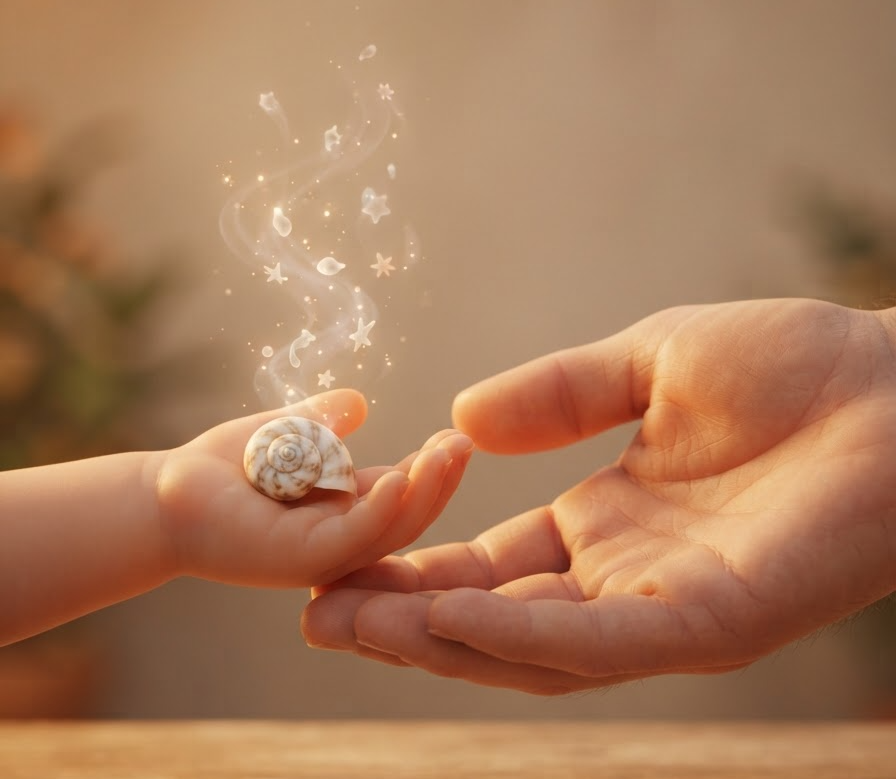
Hand a small child a shell and watch what happens to it over the next ten minutes.
It becomes a bucket. Then a spacecraft. Then a cloud floating past. Then a piece of battle armour, then a coin, then something with no name at all that they will explain to you at length if you ask. The shell has not changed. The child has simply not yet learned that a shell is only a shell.
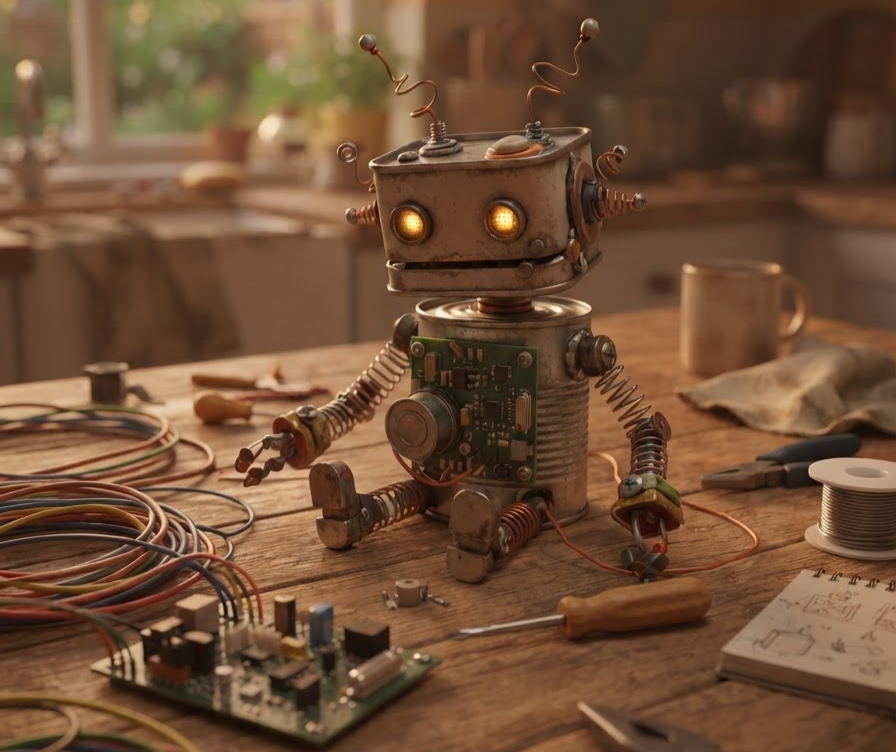
I built robots with my children on Raspberry Pi devices when they were young, and I learned something from it that has stayed with me. The coding sections were fine. They tolerated them. But the moment a physical thing appeared, a robot that moved, a chessboard, something that existed in the room with us, their attention changed completely. The abstract work suddenly had a reason to exist.
I do not think that was about attention span. I think there is something fundamental in making a physical thing, sitting somewhere near fire and water in the list of things humans respond to without being taught. I still feel it myself. On a good day, the deepest satisfaction comes from having made something that exists at the end of it.
We spent a very long time as a species learning through our hands. Picking things up, turning them over, building, breaking, carrying, throwing. That is not a recent habit we might casually set aside. It is most of what we were doing before any of the rest of this arrived.
The research backs this up. A UCL review of play published last year spends a lot of time on what they call loose parts, ordinary found things like sticks, stones, shells and leaves, and on the value of children playing alongside parents and grandparents doing ordinary things: cooking, gardening, telling stories. There is also a study on handwriting from last year suggesting that for very young children learning letters, the physical act of forming them by hand does something a keyboard does not.
I am not going to pretend to be able to tell teachers what to do with any of that. But it is hard to read it and not think about direction of travel. Every year a little more of what children do moves from their hands to a screen, and mostly nobody decided that. It just happened, one convenience at a time.
Which brings me to the awkward position of building software for children.
We are clear about what oodlü is. It is an alternative, sitting alongside the physical world rather than attempting to stand in for it. If a child has a choice between building something real with their hands outdoors and opening our app, I would rather they went outside. That is a strange thing for someone in my position to write down, but I mean it.
What we can do is make the screen time that does happen worth something. Children are going to spend hours in digital spaces whether we approve or not. That much is settled. The open question is what those spaces ask of them while they are there, and whether they leave with anything.
I remember an art student friend at university saying to me: wouldn't it be wonderful if adults could carry the same creativity they had as children into adult life. How much better and more creative we would all be for it.
I think about that when I watch a child do the shell thing. Somewhere between there and here, most of us learn that a shell is only a shell, and we stop looking for the spacecraft. Whatever we build, the least we can do is avoid speeding that process up.
We'd love to hear your thoughts on this. Find us on the social channels linked at the top of the page.